Our first project
Kuku Pesa
Kuku means chicken. Pesa means money. Kuku Pesa is the first proof of the Khonza model, with independent broiler growers in Dar es Salaam, Tanzania.
In preparation: first cohort being formed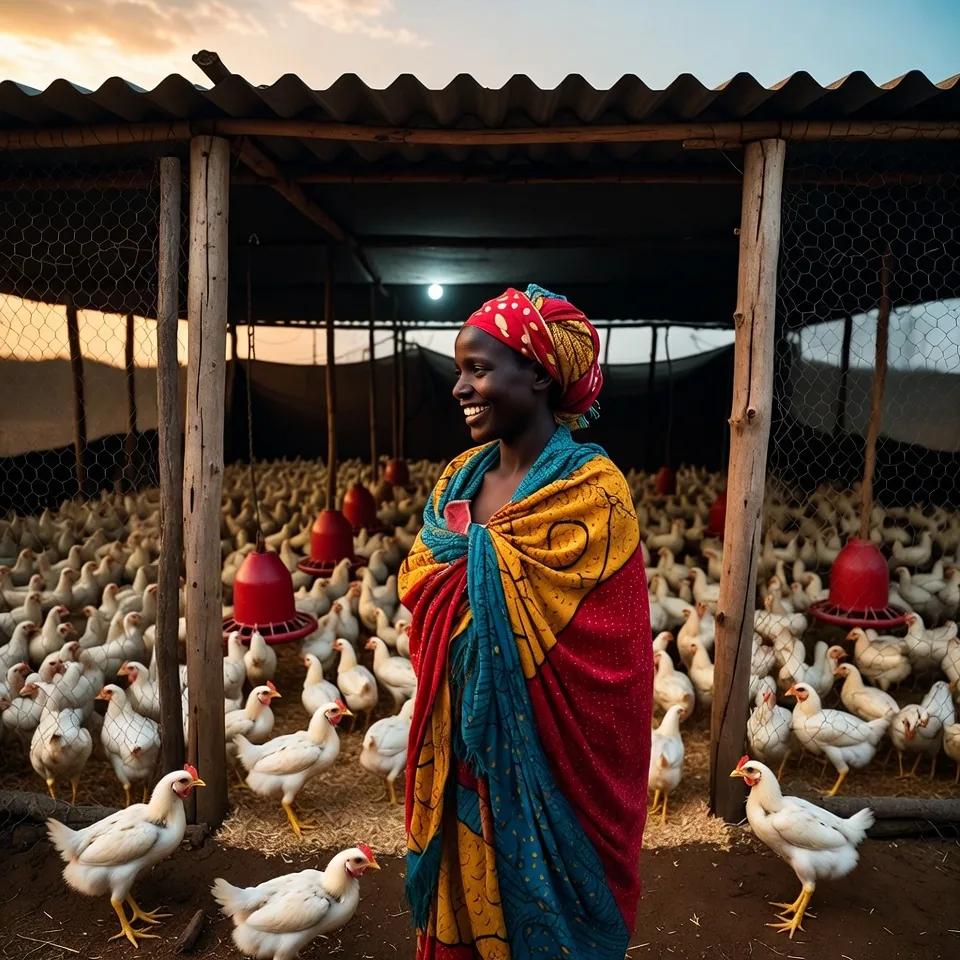
Why poultry first
The cleanest place to prove the model.
Khonza works in any supply chain where one supplier provides most of the stock and the sales cycle runs in weeks. Broiler poultry in Dar es Salaam ticks every box, which makes it the right place to start and the honest place to be tested.
A short sales cycle
Birds go from day-old chick to market in about five to six weeks, so results show up fast and capital recycles many times a year.
One main supplier
Growers buy their chicks and feed from the same supplier, whose trading history tells us who is ready to grow.
Capable growers, held back by cash
Demand is there and the skill is there. What limits the batch is the cash to fill the house.
Room for 1,000 birds. Cash for 500.
The gap we heard on farm after farm.How it works for a grower
Four steps, repeated every sales cycle.
The same Khonza model, in poultry terms. The grower keeps the same supplier and the same products. What changes is the room to grow, and the support to use it well.
Stock
Chicks and feed on trade terms
The supplier delivers the batch the house can hold. Khonza carries the terms on the stock.
CapitalGrow
Raise the flock with support
Weekly check-ins on WhatsApp, a coach on call, vet visits when they matter, and growers nearby to learn from.
Coaching and communitySell
Sell, then settle
The grower sells into the market they know and settles when the birds are sold, not on a bank's calendar.
CapitalRepeat
Grow on profit
Every completed sales cycle builds a record the grower owns. When the margin holds, the next order can be larger.
Intelligence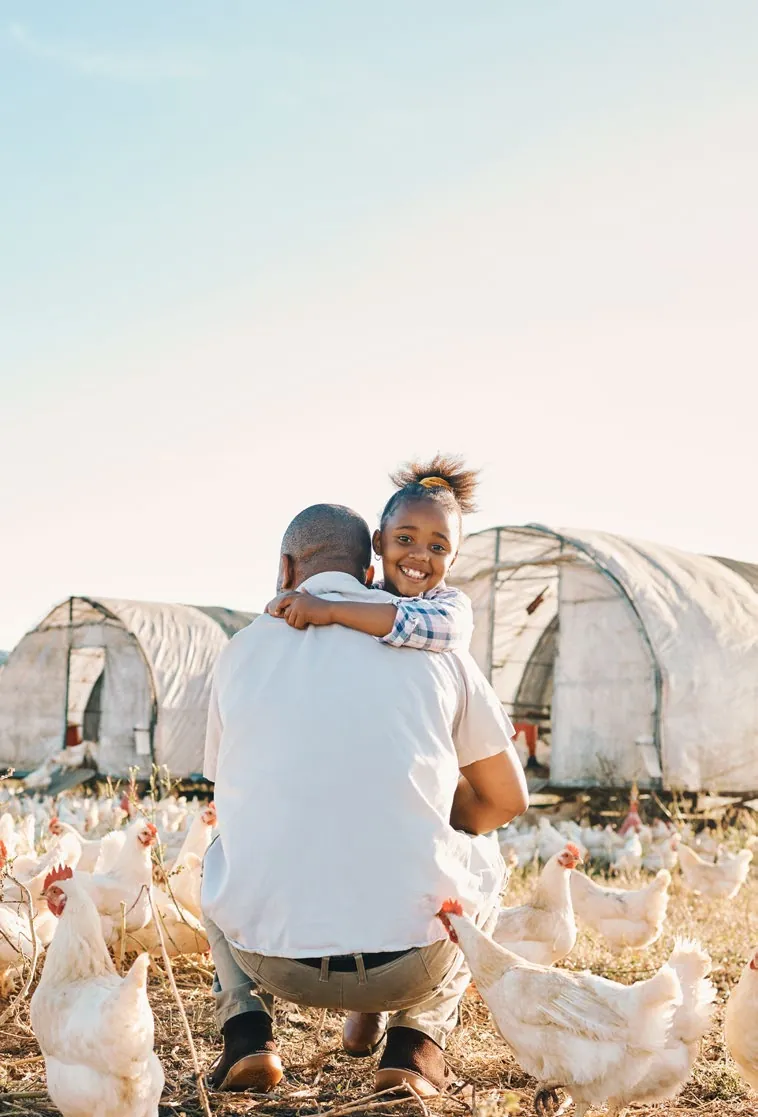
From the field
Built from the growers' own words.
In August 2026 we spent three days on farms across Dar es Salaam, alongside a leading poultry supplier's own sales team, listening to growers on what holds them back.
- Cash, not skill, sets the size of the batch
- How growers buy chicks and feed today, and on what terms
- Where and when they sell, and what decides the price
What it has to prove
A proof of concept is only useful if it can fail.
These are the questions Kuku Pesa answers before the model goes anywhere else. We will share what we learn.
Do growers fill the housing they already have?
And does a fuller house mean more profit, not just more birds?
Does settlement hold when it follows the sale?
On time, sales cycle after sales cycle.
Do growers start planning beyond one sales cycle?
Ordering the next batch before this one is sold.
Does the supplier gain customers, not risk?
Loyal, growing customers, with no credit on its balance sheet.
Where it stands
Honest progress, step by step.
Field research
Farm visits and grower interviews across Dar es Salaam.
August 2026 · DoneSupplier partnership
Agreeing terms and data sharing with a leading regional poultry supplier.
In discussionFirst cohort
A small group of growers, chosen from the supplier's trading history.
Being formedResults shared
Profit, settlement and supplier outcomes, measured from one record.
After three sales cycles